Looking for modern living room ideas that make your home feel stylish, comfortable, and welcoming? Your living room is one of the most important spaces in your home. It is where you relax after a long day, entertain guests, spend time with family, and enjoy your favorite activities. Creating a beautiful living room does not require a complete renovation or expensive furniture. With the right colors, textures, lighting, furniture, and decorative accessories, you can transform your space into a modern and cozy retreat.
Modern living room design focuses on simplicity, functionality, natural materials, and thoughtful details. It combines clean lines with comfortable furniture and attractive accents to create a balanced atmosphere. Whether you prefer a minimalist interior, a warm neutral palette, or a bold contemporary look, there are many ways to personalize your space.
In this guide, we will explore 25 modern living room ideas that can help you design a beautiful interior while making the most of your available space and budget.
Choose a Neutral Color Palette
Neutral colors are a popular choice for modern living rooms because they create a calm and timeless atmosphere. Shades such as white, beige, cream, taupe, and soft gray provide a versatile foundation for different furniture styles and decorative accessories.
You can paint your walls in a warm white shade and introduce beige upholstery, a light-colored rug, and natural wood furniture. These elements work together to create a bright and inviting environment without making the room feel overly decorated.
To prevent a neutral living room from looking flat, combine different shades and textures. For example, pair a cream sofa with a textured beige rug, linen curtains, and wooden side tables. Small accents in black, olive green, or terracotta can add contrast and personality.
A neutral palette is especially useful if you want a living room that remains attractive as design trends change.
Invest in a Comfortable Modern Sofa
The sofa is often the main focal point of a living room, so choosing the right one can significantly influence the overall design. Modern sofas usually feature clean lines, simple silhouettes, and practical upholstery that complements the rest of the interior.
A spacious sectional sofa works well in larger living rooms and provides plenty of seating for family members and guests. In a smaller space, a compact two-seater or a streamlined three-seater can create a comfortable arrangement without overwhelming the room.
Consider your lifestyle before selecting a sofa material. Durable fabrics may be useful for busy households, while textured upholstery can introduce visual interest into a minimalist interior. Neutral sofas offer flexibility, but a deep green, navy blue, or caramel-colored sofa can make a stylish statement.
Arrange the sofa to encourage conversation and ensure that people can move around it comfortably. A beautiful sofa should provide both visual appeal and everyday comfort.
Add Natural Wood Elements
Natural wood brings warmth and texture to contemporary interiors. While modern spaces often emphasize simplicity, wooden furniture and decorative details help prevent the room from feeling cold or impersonal.
Consider incorporating an oak coffee table, walnut shelving, a wooden media console, or a light wood side table. You can also introduce wood through decorative wall panels, ceiling details, or framed artwork.
The key is to maintain balance. Too many different wood finishes can make a room feel visually busy, so try to choose one or two complementary tones. Light oak works beautifully with white walls and soft beige fabrics, while darker walnut can create an elegant contrast against lighter surroundings.
Natural wood is a versatile material that suits Scandinavian, minimalist, contemporary, and mid-century-inspired living rooms.
Create a Cozy Layered Lighting Scheme
Lighting plays a major role in the atmosphere of a modern living room. Instead of relying on one bright ceiling fixture, combine several light sources to make the space more functional and inviting.
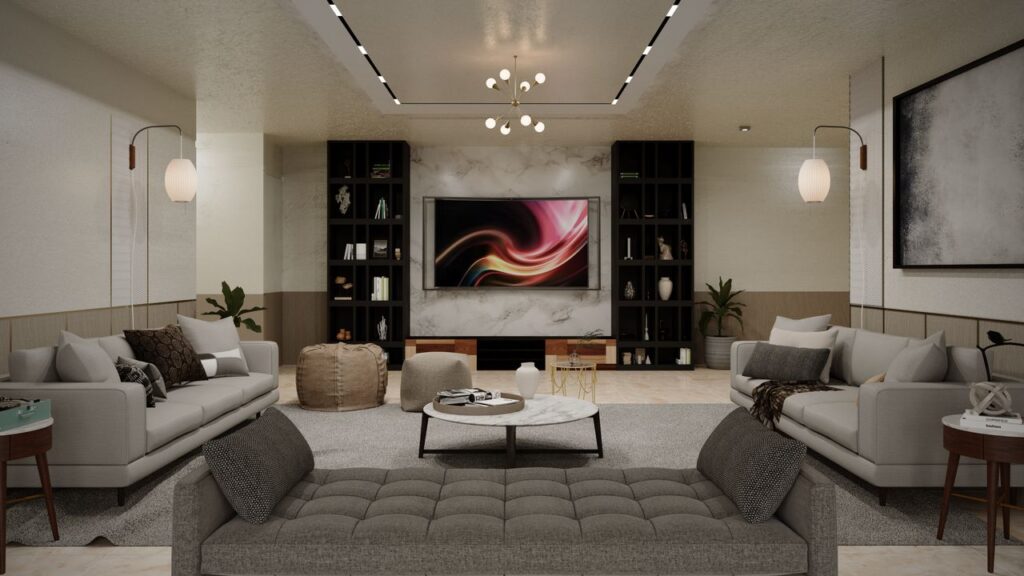
Start with general lighting, such as recessed ceiling lights or a contemporary pendant. Add task lighting with a floor lamp beside the sofa or a table lamp near a reading chair. Accent lighting can highlight artwork, shelves, architectural features, or decorative objects.
Warm white lighting often creates a more relaxing atmosphere than harsh, cool lighting. Dimmable fixtures are especially useful because they allow you to adjust the brightness for different activities, from reading to watching movies or entertaining guests.
If natural daylight enters the room, make the most of it by keeping windows relatively unobstructed. A thoughtful lighting plan helps a living room look attractive throughout the day and evening.
Use a Statement Coffee Table
A coffee table can serve as both a practical surface and a decorative centerpiece. Modern designs range from simple wooden rectangles to sculptural stone tables, rounded glass pieces, and mixed-material designs.
Choose a coffee table that complements your sofa and fits the available floor space. A round table can soften a room filled with straight lines, while a rectangular design may work well with a long sofa.
Materials also influence the overall appearance. Wood creates warmth, glass can help a small room feel more open, and stone or marble-look finishes introduce a refined touch.
Style the table with a small tray, a book, a vase, or a candle. Leave enough empty surface area for drinks, snacks, and everyday use. Keeping the arrangement simple allows the table’s shape and material to stand out.
Bring Nature Indoors With Houseplants
Indoor plants are an easy way to make a living room feel fresh and lively. Their natural shapes and green tones provide contrast against neutral walls, contemporary furniture, and clean architectural lines.
For a larger room, consider a fiddle-leaf fig, rubber plant, or another suitable floor plant. Smaller plants can decorate shelves, side tables, and window ledges. Hanging plants may also work well where floor space is limited.
Choose plants according to the amount of natural light available and your willingness to maintain them. If you have pets, check that your selected plants are safe for them before bringing them home.
You can also use attractive planters made from ceramic, woven materials, or textured stone-look finishes. Grouping plants at different heights creates a natural arrangement without making the room look cluttered.
Even one carefully positioned plant can add softness and character to a modern interior.
Design an Eye-Catching Accent Wall
An accent wall can add depth and personality without requiring you to decorate every surface. It creates a visual focal point and can help define a particular area of the living room.
Paint is one of the simplest ways to create an accent wall. Consider muted green, deep blue, warm terracotta, charcoal, or a darker version of your existing wall color. The best shade depends on the amount of natural light and the overall atmosphere you want.
Other options include textured wallpaper, decorative wood slats, subtle wall molding, or a stone-inspired finish. A wall behind the sofa or television is often a practical location because it naturally attracts attention.
Keep the remaining walls relatively simple so the accent feature does not compete with other elements. The goal is to create visual interest while maintaining the clean and balanced feeling associated with modern design.
Incorporate Modern Wall Art
Artwork adds personality to a living room and helps express your individual style. Modern interiors often feature abstract paintings, minimalist illustrations, photography, or large-scale prints with simple compositions.
A single oversized artwork can create a strong focal point above the sofa. Alternatively, a gallery wall can display several smaller pieces arranged in a consistent pattern. To make a gallery wall feel organized, use complementary colors, similar frame finishes, or a shared artistic theme.
Consider how the artwork relates to the room’s existing palette. A colorful painting can introduce energy into a neutral interior, while black-and-white photography can maintain a more understated appearance.
Hang artwork at a comfortable viewing height and make sure its scale suits the wall. Pieces that are too small may appear disconnected from large furniture, while oversized artwork can dominate a narrow space.
Choose art that you genuinely enjoy rather than following trends alone.
Add Texture With Rugs and Cushions
Texture is essential when creating a cozy modern living room. Even a room with a simple color palette can feel rich and inviting when it includes a thoughtful mix of soft, woven, smooth, and natural materials.
Start with an area rug that complements your furniture and defines the seating zone. Wool, cotton, jute, and textured synthetic rugs each offer different visual and practical benefits. A larger rug can help connect separate pieces of furniture and make the arrangement feel cohesive.
Next, add cushions in a combination of fabrics, such as linen, cotton, velvet, or knitted materials. A throw blanket draped over the sofa introduces another layer of comfort.
You do not need to use many colors to create interest. Combining different textures in similar shades can produce a sophisticated result while keeping the room calm and uncluttered.
Make Small Living Rooms Feel Larger
A small living room can still look modern, stylish, and comfortable when the layout is carefully planned. The most important principle is to use available space efficiently without sacrificing essential furniture or everyday functionality.
Choose furniture with proportions that suit the room. A compact sofa, nesting tables, and a slim media console may be more practical than oversized pieces. Furniture with raised legs can create a greater sense of visible floor space.
Mirrors can also help reflect light and make a room appear more open. Position one opposite a window or near a source of natural light when possible.
Use a limited color palette to create visual continuity, and avoid filling every wall and surface with decorations. Closed storage can hide everyday clutter, while floating shelves provide space for a few carefully selected objects.
Finally, maintain clear walking paths between furniture pieces. A well-organized layout often makes a small room feel more spacious than simply adding more decorative elements.
Create a Minimalist Living Room
Minimalism is an excellent approach for people who appreciate clean spaces and practical design. It emphasizes intentional choices, simple forms, useful furniture, and a limited selection of decorative accessories.
Begin by identifying the essential functions of your living room. You may need a sofa, a coffee table, lighting, a media unit, and a few storage solutions. Select pieces that serve a clear purpose and complement one another.
Keep surfaces relatively clear and choose decorations carefully. Instead of displaying many small objects, use one sculptural vase, a distinctive lamp, or a meaningful artwork as a focal point.
Minimalism does not mean that a room must feel empty or uncomfortable. Soft fabrics, warm lighting, natural wood, and carefully chosen accessories can make a minimalist interior feel inviting.
The secret is to create a balance between open space and personal expression, allowing each piece to contribute to the overall design.
Introduce Curved Furniture and Organic Shapes
Curved furniture is a useful way to soften the appearance of a contemporary living room. Rounded sofas, circular coffee tables, arched mirrors, and sculptural chairs can introduce movement into interiors dominated by straight lines.
A curved sofa can become a striking centerpiece in a spacious living room, while a round coffee table may be a more practical choice for a smaller area. Rounded furniture can also help create a more relaxed conversation zone.
Organic shapes work particularly well with natural materials and soft colors. Pair a curved chair with a textured rug, a wooden table, or a ceramic lamp to create a balanced arrangement.
You do not need to replace all your existing furniture to adopt this trend. Adding one or two rounded accessories may be enough to soften the room and make the design feel more contemporary.
Choose pieces that remain comfortable and functional rather than selecting unusual shapes purely for appearance.
Use Smart Storage and Multi-Functional Furniture
A stylish living room is easier to maintain when everything has a place. Smart storage solutions help keep everyday items organized while preserving the clean appearance of a modern interior.
Consider a media console with closed cabinets, a storage ottoman, nesting tables, or a coffee table with hidden compartments. These pieces provide useful storage without requiring additional furniture.
Floating shelves can display books, plants, and selected decorative objects while keeping the floor area open. Built-in cabinets are another option when you want storage that blends seamlessly into the room’s architecture.
Multi-functional furniture is especially valuable in apartments and small homes. A sofa bed can accommodate overnight guests, while a compact desk may create a useful work area without requiring a separate room.
Organize items according to how often you use them. Keep frequently needed objects accessible and store less-used belongings out of sight. A thoughtful storage system makes your living room easier to clean, more practical, and more visually appealing.
Conclusion
Creating a beautiful modern living room is about finding the right balance between style, comfort, and functionality. The best modern living room ideas combine thoughtful furniture choices, attractive colors, layered lighting, natural materials, and personal decorative touches to create a space that feels welcoming and practical.
Start with the elements that will make the biggest difference, such as choosing a comfortable sofa, improving the lighting, or introducing a cohesive color palette. Then build on your design with rugs, cushions, artwork, houseplants, and smart storage solutions.
Remember that a modern living room does not need to be expensive or perfectly matched. Small changes can have a significant impact when they support the overall design and suit your daily routine. Whether you prefer minimalist interiors, warm contemporary spaces, or bold accents, the most successful living room is one that reflects your personality while making everyone feel comfortable.
Choose the ideas that work best for your home, experiment with textures and layouts, and create a stylish living room you will enjoy for years to come.
FAQs
1. What are the best modern living room ideas for a small space?
The best ideas for small living rooms include choosing compact furniture, using mirrors to reflect light, selecting a light color palette, and incorporating multi-functional pieces. Floating shelves and closed storage can reduce clutter, while furniture with raised legs helps maintain a more open appearance. Keeping clear walking paths also makes the room feel more spacious.
2. Which colors are best for a modern living room?
Popular modern living room colors include white, beige, cream, gray, taupe, olive green, and earthy brown. Neutral shades create a versatile foundation, while accent colors such as navy, terracotta, or forest green add personality. The best combination depends on your natural lighting, furniture, and preferred atmosphere.
3. How can I make my living room look modern on a budget?
You can update your living room affordably by rearranging furniture, painting a wall, changing cushion covers, adding a second light source, or introducing a few houseplants. Replacing outdated accessories with simpler designs and organizing clutter can also make a noticeable difference. Focus on a few high-impact changes instead of replacing every item.
4. What furniture should a modern living room have?
A typical modern living room includes a comfortable sofa, a coffee table, suitable lighting, and storage for media or everyday belongings. Depending on the available space, you may also include accent chairs, side tables, shelving, and an area rug. Choose furniture that supports your lifestyle and leaves enough room for easy movement.
5. How do I make a modern living room feel cozy?
Use warm lighting, soft rugs, comfortable cushions, textured throws, and natural materials such as wood. Houseplants, personal artwork, and a coordinated color palette can add warmth without creating clutter. Combining clean-lined furniture with soft fabrics helps maintain a modern appearance while making the room feel comfortable and inviting.
Also read: Secret Santa: Best Gift Ideas, Rules, and Tips for a Perfect Christmas Gift Exchange