
Changing your vehicle’s engine oil is one of the most critical preservation responsibilities you can carry out to maintain your vehicle jogging easily. If you’ve ever wondered the way to change oil yourself, the coolest news is that it’s less complicated than you may think. Learning this simple ability can keep cash, expand your engine’s lifespan, and improve car overall performance.
In this complete manual, you’ll study everything you want to understand about the way to change oil competently and effectively, even in case you’re a entire amateur.
Why Changing Engine Oil Is Important
Engine oil lubricates the moving parts interior your vehicle’s engine, reducing friction and preventing overheating. Over time, oil will become grimy and loses its effectiveness. When this occurs, engine additives can put on out quicker.
Regular oil modifications help:
Improve engine performance
Increase fuel performance
Reduce engine put on
Extend engine life
Prevent overheating
Most mechanics recommend converting oil each 5,000–10,000 kilometers, depending on the automobile and oil kind.
Tools and Materials You’ll Need
Before starting, gather the important tools and substances.
You will want:
New engine oil (take a look at owner’s manual)
New oil filter
Oil filter out wrench
Socket wrench
Oil drain pan
Funnel
Car jack and jack stands (optional)
Gloves and material
Having the entirety ready makes the oil change manner faster and purifier.
Step-by using-Step Guide: How to Change Oil
Follow those steps carefully to alternate your automobile’s oil competently.
Step 1: Prepare Your Vehicle
Park your automobile on a flat surface and turn off the engine. Let the engine cool for about 15–20 minutes so the oil isn’t too warm.
Engage the parking brake to keep the auto strong.
If wanted, elevate the auto using a jack and secure it with jack stands.
Step 2: Locate the Oil Drain Plug
Get under the car and find the oil drain plug at the bottom of the engine oil pan.
Place the oil drain pan at once under it to catch the old oil.
Step 3: Drain the Old Oil
Using a socket wrench, slowly loosen the drain plug.
Once eliminated, allow the oil to drain completely into the pan. This normally takes 5–10 mins.
Be careful — the oil might also still be heat.
After draining, reinstall and tighten the drain plug securely.
Step 4: Remove the Old Oil Filter
Locate the oil filter near the engine.
Use an oil clear out wrench to dispose of it by way of turning counterclockwise.
Some oil may additionally spill out, that is ordinary. Make sure the drain pan is placed efficaciously.
Before putting in the new filter, apply a small amount of clean oil to the rubber gasket. This facilitates create a proper seal.
Install the brand new clear out via hand and tighten it gently.
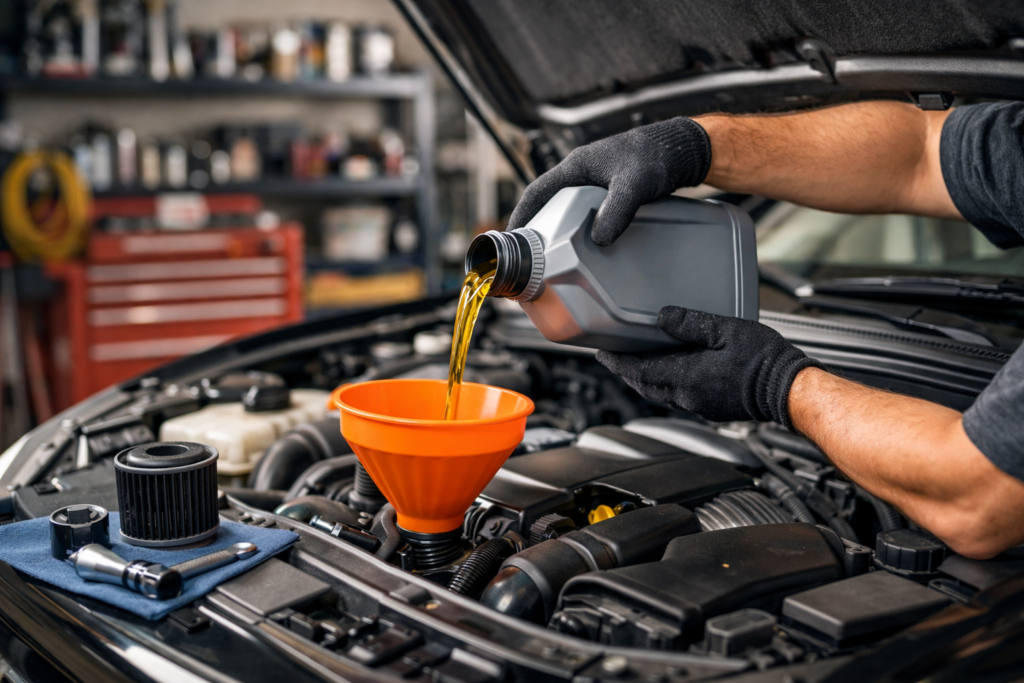
Step 5: Add New Engine Oil
Open the hood and find the oil filler cap on pinnacle of the engine.
Remove the cap and vicinity a funnel within the commencing.
Pour in the recommended amount of latest oil slowly.
Check your proprietor’s guide for the precise oil potential.
Step 6: Check the Oil Level
After adding oil:
Wait a minute for oil to settle.
Pull out the dipstick.
Wipe it clean.
Insert it again and do away with it.
The oil stage should be among the minimum and maximum marks.
Add more oil if important, however avoid overfilling.
Step 7: Start the Engine
Start the engine and permit it run for about 30–60 seconds.
Check below the car for leaks near:
Oil clear out
Drain plug
Turn off the engine and recheck the oil degree using the dipstick.
How Often Should You Change Oil?
The frequency depends on:
Vehicle kind
Driving conditions
Oil best
Manufacturer recommendations
General guidelines:
Conventional oil: every 5,000 km
Synthetic oil: every 8,000–10,000 km
If you force in heavy site visitors, dusty conditions, or severe climate, you can want more frequent oil changes.
Common Mistakes to Avoid
When learning a way to exchange oil, avoid those common errors:
Over-tightening the oil filter
This can damage the gasket and reason leaks.
Using the incorrect oil kind
Always observe producer tips.
Forgetting the drain plug washing machine
A missing washing machine can cause oil leaks.
Overfilling oil
Too a whole lot oil can harm the engine.
Not replacing the oil filter
A dirty filter out reduces oil effectiveness.
Choosing the Right Engine Oil
There are distinctive types of engine oil to be had:
Conventional Oil
Affordable and suitable for older engines.
Synthetic Oil
Provides higher performance and lasts longer.
Synthetic Blend
A mix of traditional and synthetic oil.
Check your automobile guide for the recommended oil viscosity, inclusive of 5W-30 or 10W-40.
Environmental Safety Tips
Used engine oil is harmful to the environment and must by no means be poured down drains or at the floor.
Instead:
Store used oil in a sealed container
Take it to a recycling middle
Visit an automobile repair keep for disposal
Many carrier stations take delivery of used oil free of charge recycling.
Benefits of Changing Oil Yourself
Learning the way to trade oil at domestic gives several benefits:
Saves Money
DIY oil changes cost substantially much less than provider centers.
Better Vehicle Awareness
You come to be familiar along with your car’s situation.
Convenience
No waiting at workshops.
Confidence in Maintenance
You recognize the job is achieved correctly.
Signs Your Car Needs an Oil Change
Watch for these caution signs:
Oil exchange mild is on
Engine noise will increase
Oil seems dark and dirty
Burning oil scent
Reduced gasoline efficiency
Ignoring those signs and symptoms can result in high-priced engine repairs.
Final Thoughts
Now which you recognize how to trade oil, you can expectantly perform one of the most crucial vehicle maintenance tasks your self. Regular oil modifications defend your engine, enhance overall performance, and help your car ultimate longer.
Even in case you’re new to car maintenance, following the steps in this manual will make the process simple and secure.
Taking care of your engine these days can save you from high priced upkeep inside the future